

Put AI agents to work with institutional control.
Zafin AIOS is the control plane for governed agentic work. It connects Agent Management, Work Management, Environment Management, Control Tower, and Evaluations in one operating system.
Explore the 5 platform areas
How Zafin AIOS Works: Five Connected Platform Areas
AIOS connects the capabilities institutions need to set agents up, manage their work, run them in approved environments, govern every outcome and improve performance over time.
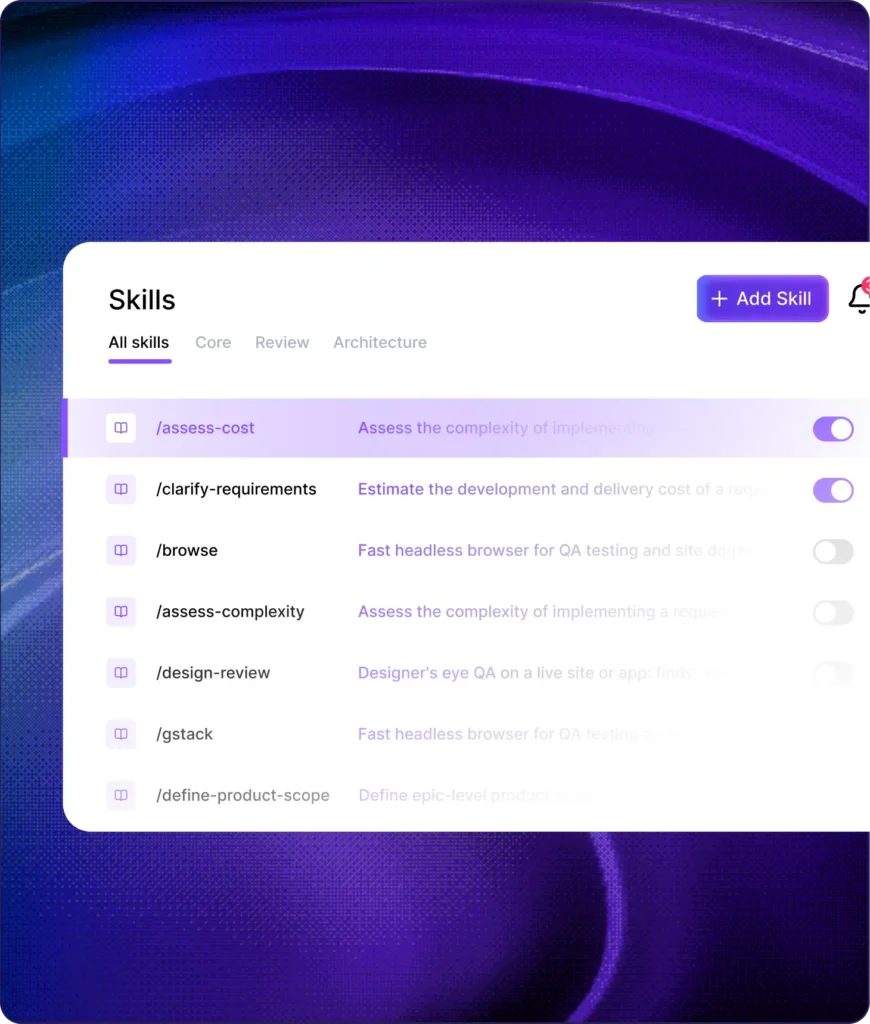
AGENT MANAGEMENT
Set every agent up with a clear role, access and accountability.
AIOS treats each agent as a governed member of the workforce, with a defined identity, profile, knowledge, skills and tools.
Identity and access
Give every agent a secure workforce identity, with role-based access managed under institution-defined identity and access controls.
Models
Skills Registry
Scale reusable know-how through a Skills Registry, then assign each skill to agent profiles that need it.
Knowledge Fabric
Tools Registry
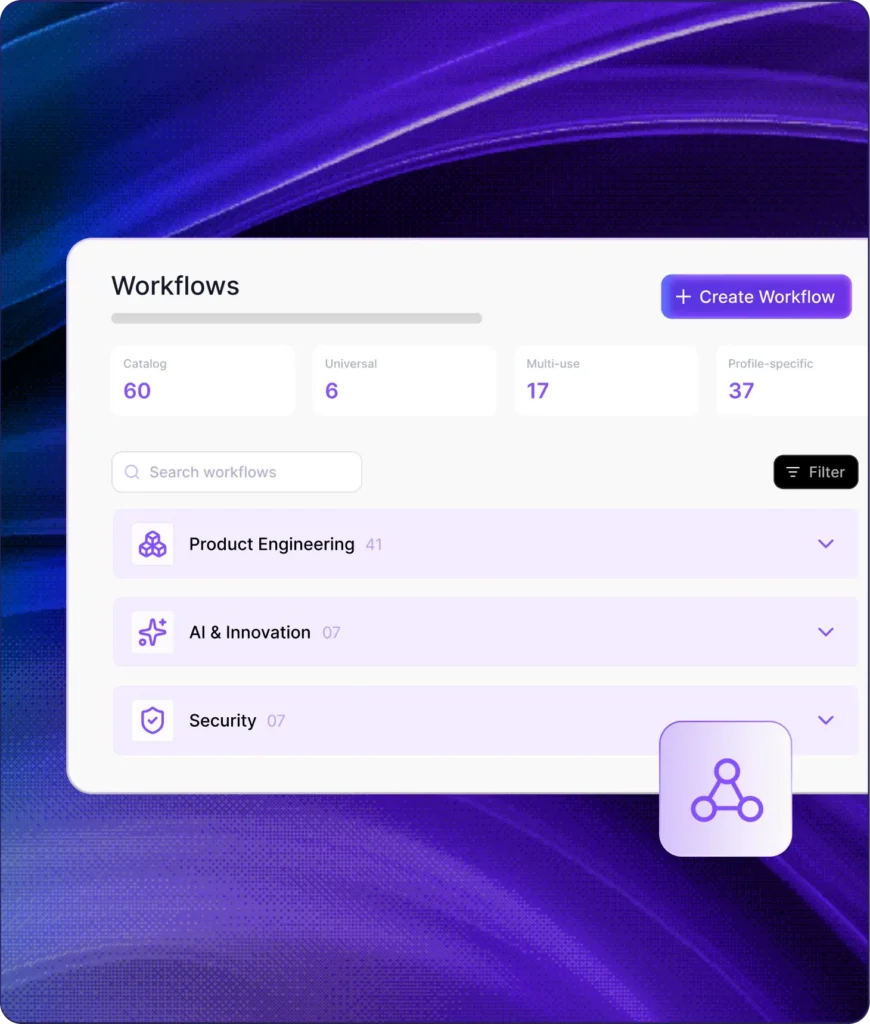
WORK MANAGEMENT
Manage the full lifecycle of agent work.
Agent Work Management helps you create cases, guide work through governed workflows and turn reviewed results into case studies that improve future work.
Case types
Workflows
Human authority
Workflow versioning
Proof of work
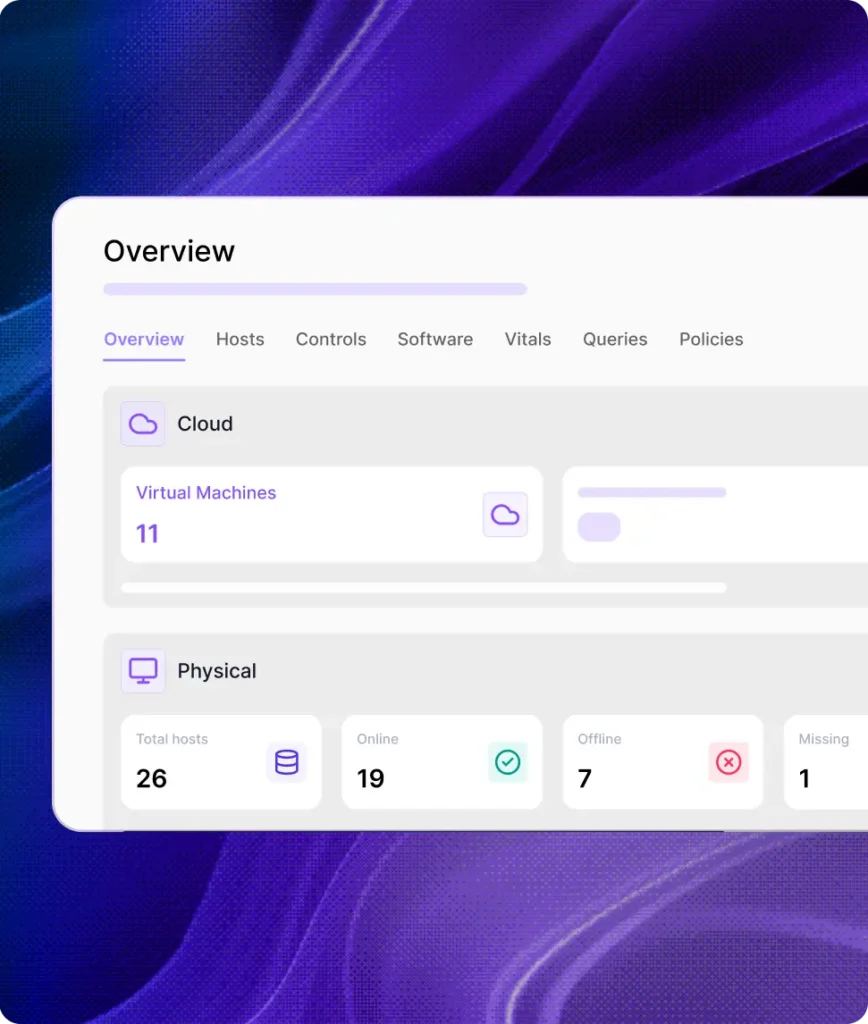
ENVIRONMENT MANAGEMENT
Run agent work in an approved environment.
AIOS prepares the physical or cloud environment where agent work runs, with identity, access and resources set before execution starts.
Physical compute
Turn approved physical devices into ready-to-use agent environments with the right identity, access and security controls.
Cloud compute
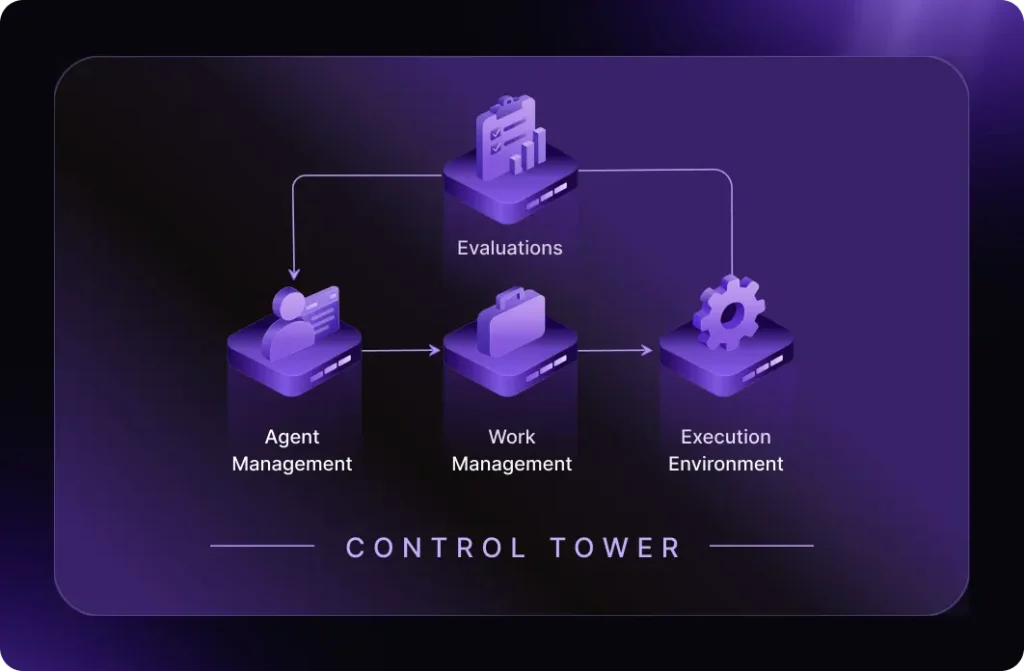
CONTROL TOWER
Monitor, govern and prove every agent outcome.
AIOS brings traces, cost, access controls, and proof of work together for AIOS and supported external agents, with spending limits and kill switches.
Traces
Get observability and auditability of agents in AIOS and your existing external agents, with available turn-level traces of prompts, outputs, token counts, model selection and execution time.
Analytics
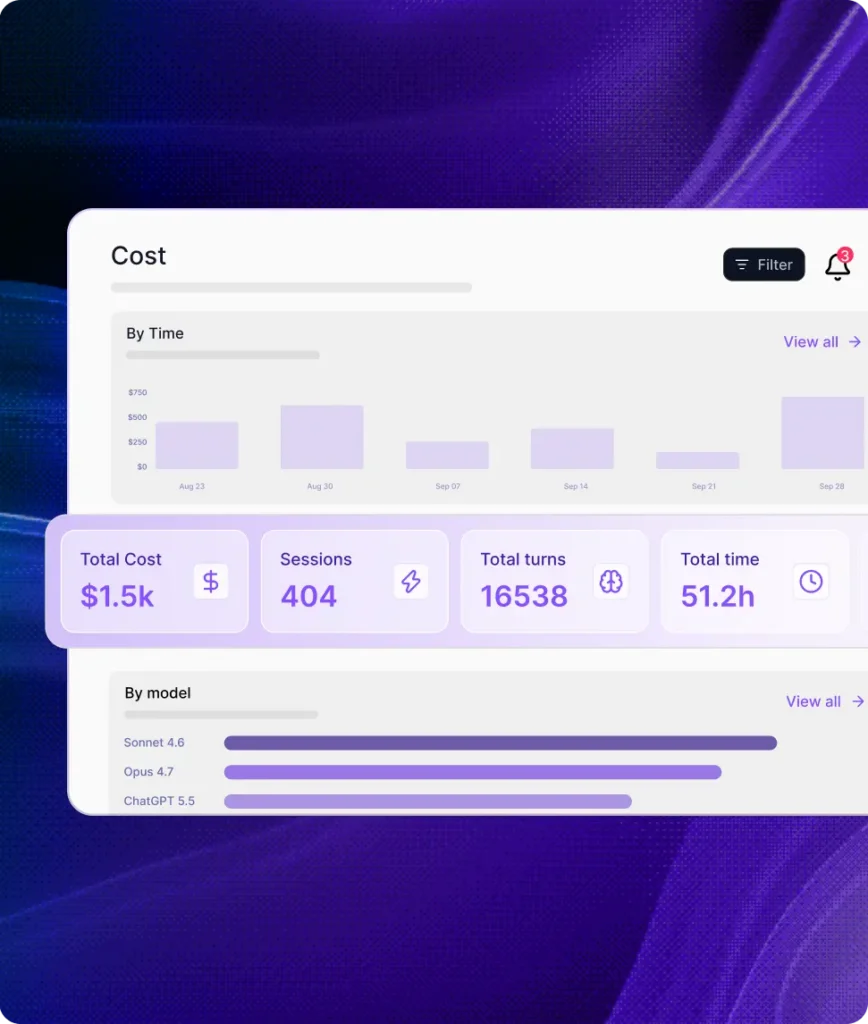
Cost
Attribute every dollar spent on agent work across LLM token and compute costs, with every model and turn captured. Monitor AI usage costs for supported external agents and disable them when spending quotas are reached.
Role-based access
Govern who can view and act on agent work with role-based access controls. Control external agents’ access to your organization’s tools and require approval for selected actions through the AIOS gateway.
Proof of work
Prove how outcomes were reached across agents in AIOS and your existing external agents, with an auditable evidence trail of available plans, transcripts, approvals, artifacts, and test evidence.
EVALUATIONS
Measure how agents perform and where to improve.
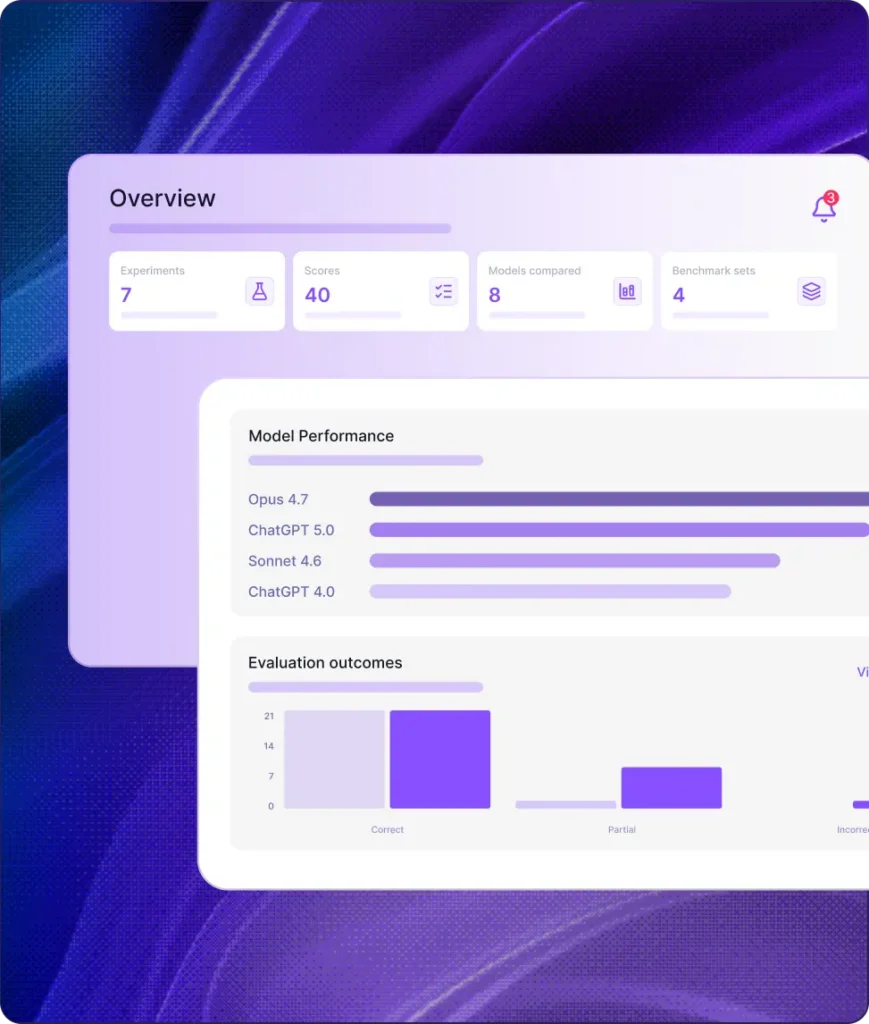
AIOS evaluates cases throughout their lifecycle, using rubrics, benchmark sets and experiments built around your institution’s own work.
Rubrics
Benchmark sets
Lifecycle evaluations
Track agent performance during a workflow, on demand or through scheduled runs that help detect drift over time.
Scores and reasoning
Experiments
Ready to See Zafin AIOS in Action?
Request a briefing with us to see how Zafin AIOS can help you put AI agents to work without losing control. Together, we’ll identify a high-value workflow and map out how to scale it from pilot to production, with human oversight, cost controls, and proof of work built in.
Frequently asked questions
How does AIOS fit with our existing AI tools, models and systems?
AIOS connects the agents, models, tools, knowledge sources, and environments your organization already uses, including external agents from platforms such as Azure Foundry and Salesforce Agentforce.
Direct integrations provide activity and cost visibility, kill switches, and spending limits. Routing requests through the AIOS gateway adds controls over access to your organization’s tools, individual actions, and human approvals.
Available controls depend on the external platform and how it connects to AIOS.
How is AIOS different from agent orchestration?
What remains under human control?
Your institution defines where human authority gates are required for review, approval, feedback, clarification, or stopping work. AIOS builds those gates into the workflow, gives reviewers the context they need to decide, and records the decision as part of the proof of work.
What can we use AIOS for?
AIOS gives institutions multiple ways to start, one workflow at a time. Today, Zafin is focused on three starting points: governed software and application delivery, modernising institutional systems and workflows, and making regulated work and evidence operations more defensible.
The right place to begin is the workflow where you need faster execution, clearer control and evidence you can stand behind.
Do you have proof that AIOS works?
Yes. Zafin is Customer Zero for AIOS. We are applying it to governed Banking Platform development work, including Deal Manager enhancement requests and defect resolution.
- 100% of AIOS-routed work is instrumented with status, duration, cost visibility and proof of work.
- 80% reduction in cost per resolution through model-use optimisation and workflow visibility.
- 75% more enhancement requests and defects resolved without proportional engineering-capacity growth.
Where should we start with AIOS?
Start with a bounded workflow where the business goal, the required knowledge and systems, the control points, and the measures of success are clear. This could be a software-delivery workflow such as an enhancement, defect, testing process or vulnerability-remediation task.
Can AIOS monitor spending and stop external agents?
Yes. AIOS can monitor AI usage costs and disable an external agent when it reaches a spending quota. Kill switches also provide a way to intervene when needed.
Through the gateway, AIOS can restrict tool access and block individual requests. Cost visibility does not necessarily include the full infrastructure or vendor bill.
Do we need to migrate existing agents into AIOS to govern them?
No. External agents can remain on their existing platforms and connect through direct integrations or the AIOS gateway.
