
Introduction
Clearing the backlog while lowering cost and expanding delivery capacity.
Zafin first put AIOS to work internally to help build and evolve its own Banking Platform.
Zafin chose Deal Manager as one of its first Customer Zero proving grounds because corporate and commercial banking is complex. It brings together interconnected product and pricing logic, client-specific requirements, complex arrangements, enhancements, defects, testing and review.
It was the ideal environment in which to test whether agentic work could scale without sacrificing quality, evidence or human authority.
Results at a Glance
With AIOS, Zafin changed how Deal Manager work moved. Defects and enhancement requests now flow from business intent to reviewed outcome, with knowledge, agent execution, completeness checks, reproduction, resolution, proof of work, human review, traceability, cost visibility, and learning built into the process.
- Instrumentation: 100% of AIOS-routed work instrumented with status, duration, cost visibility, and proof of work.
- Cost governance: 80% reduction in cost per resolution by optimizing model usage and workflow visibility.
- Throughput: 75% more enhancement requests and defects resolved without proportional engineering capacity growth.
- Backlog movement: The defects and enhancement requests backlog cleared once Deal Manager development work was running through AIOS.
Metrics reflect initial Customer Zero use cases and in-scope workflows at Zafin. Results may vary by workflow complexity, operating environment, implementation scope, and measurement period.
The Challenge
The challenge was increasing the capacity to make changes to Zafin’s Banking Platform while maintaining quality, control, accountability, and human judgment.
Before AIOS, a Deal Manager defect or enhancement request typically entered as a ticket, often with incomplete context. Teams then had to clarify the request, recreate the issue, make and test the change, document it, and move it through review. Work moved across queues and handoffs. Engineers and testers spent time reconstructing intent, while leaders had to rigorously prioritize what could progress with the capacity available.

We’d have to really rigorously prioritize the different enhancements and bugs.
Rob Dunlap, Chief Product OfficerDeal Manager made this pressure visible for Zafin. It was the right Customer Zero proving ground because the work was real, complex, and close to customer value.
The Solution
AIOS introduced a governed operating path for Deal Manager development work on Zafin’s Banking Platform. It connects business intent, the right knowledge and agents, human decision points, proof of work, and visibility into the progress and cost of each request.
At intake, a requester describes the issue, requirement, or business intent, with screenshots or videos where useful. AIOS assesses completeness and identifies where clarification is needed before work begins.
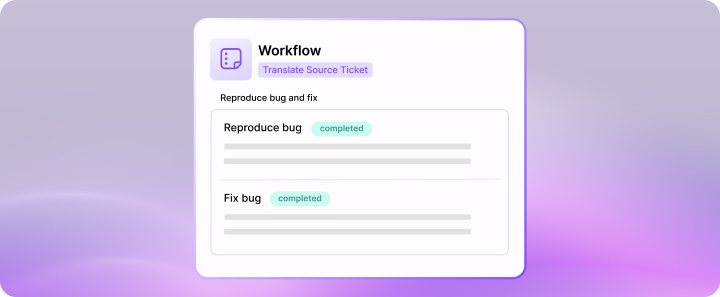
Once the request is ready, AIOS orchestrates the work through reconstruction, reproduction, representative data, resolution, evidence, and review. Agents perform meaningful execution steps within a controlled path, while people remain responsible for judgment, approval, exceptions, and review.
Proof of work is created as the request progresses, giving reviewers context they can inspect. Status, duration, model usage, and cost can be examined at the level of the individual request.
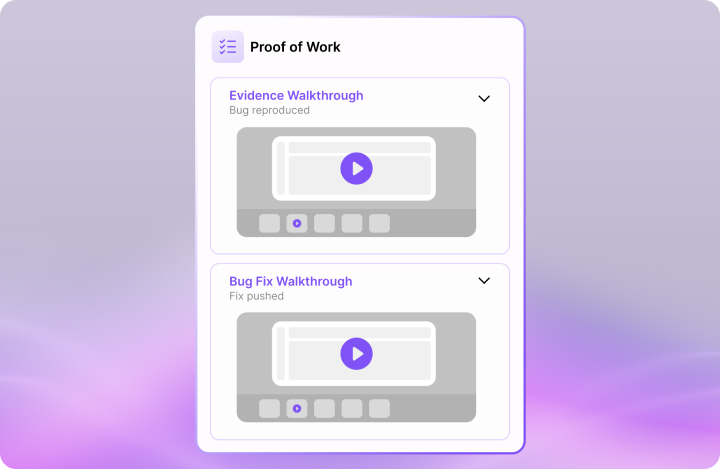
The human describes the defect at a high level, but the agent elaborates it, reproduces it with evidence, and fixes it with detailed proof of work.
Shahir Daya, Chief Technology Officer and Head of AIOS- Work moved through tickets, queues, handoffs, triage, reproduction, review, testing, and release steps.
- Engineers and testers spent time reconstructing intent before resolving the issue.
- Leaders had limited issue-level visibility into status, cost, duration, and proof.
- Backlog movement depended heavily on available human capacity.
- Work moves from business intent to reviewed outcome through a governed flow.
- Agents help assess completeness, reproduce issues, resolve work, create evidence, and support review.
- Status, duration, model usage, proof of work, cost visibility, and review context are preserved.
- Human effort can focus more on intent, judgment, review, exceptions, and approval.
The Results
- 100% of AIOS-routed work instrumented with status, duration, cost visibility, and proof of work
- 80% reduction in cost per resolution by optimizing model usage and workflow visibility
- 75% more enhancement requests and defects resolved without proportional engineering capacity growth
- Backlog cleared once Deal Manager development work was running through AIOS
The numbers matter because they show more than speed. They show that agentic work can be governed, measured, reviewed, cost-managed, and improved as part of the delivery process.
Why This Matters
Deal Manager shows AIOS at work on real product delivery, but it is only one proving grounds.
What Zafin is proving is a new way to build and evolve complex banking software, where agents take on more execution, humans retain authority and judgment, and evidence, cost visibility, and governance stay attached to the work.
For Zafin, that means accelerating how the Banking Platform evolves. For regulated institutions, it provides a practical example of moving agentic AI from individual productivity into governed enterprise execution with the controls, evidence, cost visibility, and human authority required.