






Unlock faster product innovation, shorter pricing cycles, and real visibility into profitability.
As Product leaders within Corporate Treasury, you carry an extraordinary amount of responsibility. You define what services the bank offers its corporate clients, how pricing works, and how products evolve to meet customer and regulatory expectations. Your decisions influence revenue, customer experience, operational effort, and long-term strategic direction.
Yet too often, the tools meant to support you, particularly Account Analysis, limit your ability to modernize. Pricing updates/decisions turn into long IT projects. Modeling becomes guesswork. And instead of focusing on innovation, Product teams get trapped managing the complexity of legacy systems and lengthy APR (Annual Pricing Review) processes.
The Reality for Product Teams Today
Most Product teams work across a fragmented ecosystem where pricing data and rules are scattered across the core system, spreadsheets, CRM tools, and custom billing engines. As a result, even simple insights (like understanding which customers are profitable or which fees are leaking) require disproportionate effort.
This fragmentation leads to real, day-to-day challenges in the bank’s Account Analysis workflows:
- Pricing lives in multiple unconnected systems, creating conflicting versions of the truth.
- Product teams cannot easily see usage, profitability, or customer-level impact across the portfolio.
- Every price change requires coordination with IT, slowing the pace of innovation.
- Sales teams are making ad-hoc exceptions at the client level because guardrails aren’t enforced centrally.
- Annual Pricing Reviews take way longer than it should because the underlying data is trapped in legacy billing platforms.
- Clients are still on outdated or expired, lower pricing where they should be paying much higher. This often goes unnoticed, leaking millions for the bank.
These problems are symptoms of the same issue: legacy Account Analysis systems were never built to support modern product governance and innovation velocity.
Where the Lifecycle Breaks Down for Product Teams
Let’s take a look at a product-focused view of how concept, pricing, execution, and performance analysis should work, and where today’s reality falls short for Product teams.
Stage 1: Modern Product & Pricing Design + Governance
Product teams need the ability to model, design, govern, update pricing without relying on IT cycles or manual coordination. This is where today’s landscape creates the most friction.
Today’s Challenges
Most banks still store product definitions inside their legacy core system, which means every change, no matter how small, requires an IT ticket. That alone slows innovation. But the downstream ripple effects are even greater:
- There is no single, governed Product Catalog; instead, product definitions, attributes, and pricing logic sprawl across the bank’s tech ecosystem.
- Governance relies heavily on spreadsheets, email threads, and manual cross-team coordination to manage approval workflows, guardrails, and waivers or discounting limits before going live.
- Without system-enforced controls, pricing policies are interpreted manually, increasing the risk of inconsistency and leakage.
- Modeling the impact of potential pricing updates ahead of rollout is either impossible or extremely time-consuming since critical data is locked inside legacy engines.
Without a modern, centralized foundation, Product teams cannot operate with precision or confidence.
What It Should Look Like
A modernized approach gives Product teams full control over design and governance:
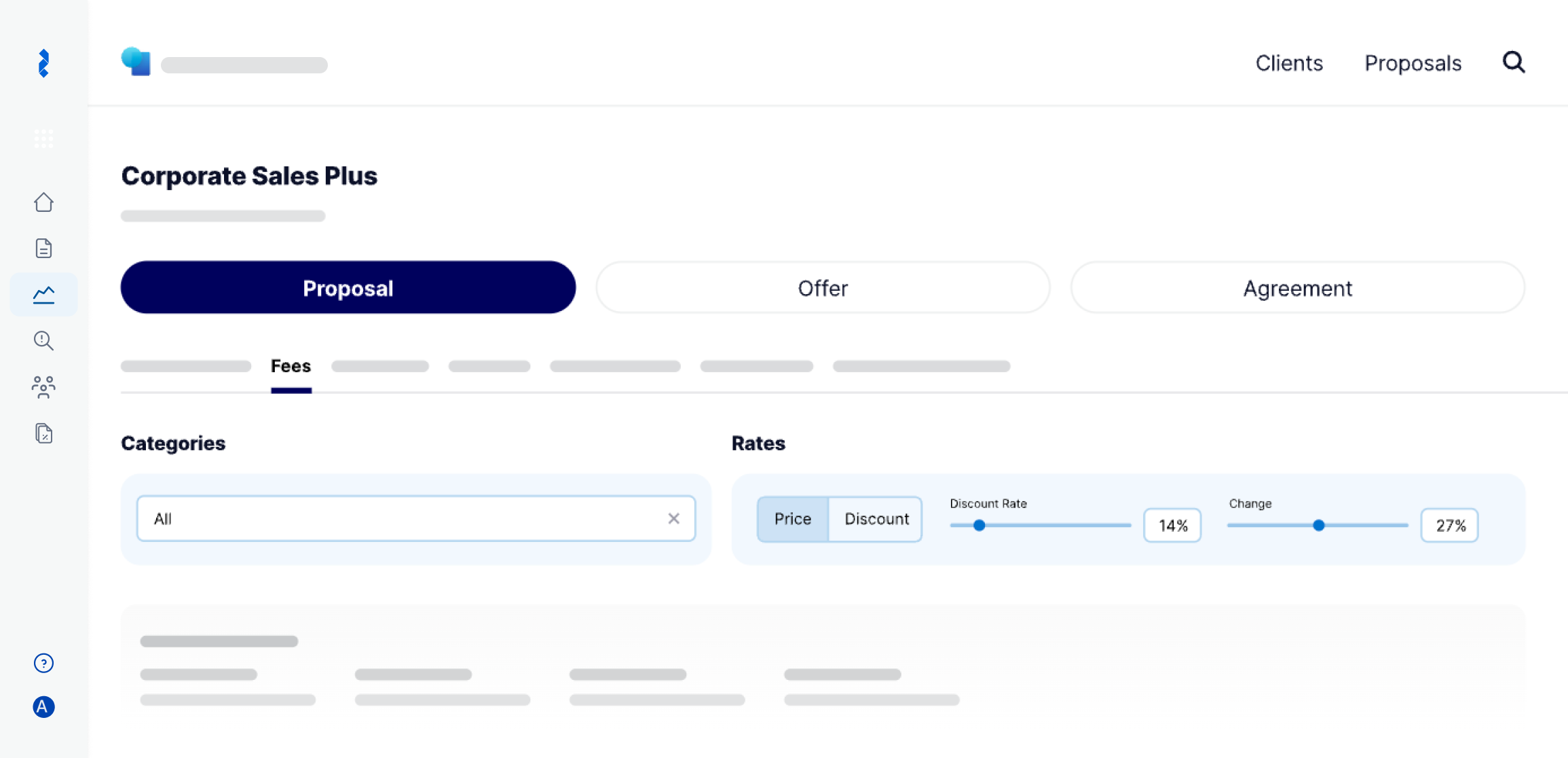
- A segregated, governed Product Catalog outside the core becomes the authoritative source of truth for all product definitions.
- Product teams configure pricing components (bundles, waivers, ECR, tiering, attributes) without IT involvement.
- Model-driven governance enables scenario simulation, such as:
- “If fee A increases to B, what happens to our portfolio revenue?”
- “Which customers require targeted outreach or alternative pricing?”
- Once approved, standard pricing guardrails flow directly to Sales teams, ensuring consistency and controlling revenue and profitability.
This is the foundation Product teams need in order to move faster, govern effectively, manage risk proactively, and optimize product performance in billing.
Stage 2: Performance Monitoring, Leakage Management
This stage may be where legacy Account Analysis has the biggest impact on Product teams. Without transparent insights, they operate reactively rather than strategically.
Today’s challenges:
- Product teams lack real-time visibility into fee performance, usage patterns, ECR drift, and true profitability.
- Temporary deals and waived fees frequently remain active indefinitely because no system enforces expirations.
- Managing temporal changes (e.g., fee increases scheduled for two quarters out) is risk-prone and often manual, leading to significant revenue leakage.
- Leakage accumulates silently (sometimes for years) making it difficult to pinpoint underperforming services or correct pricing issues quickly.
What it should look like:
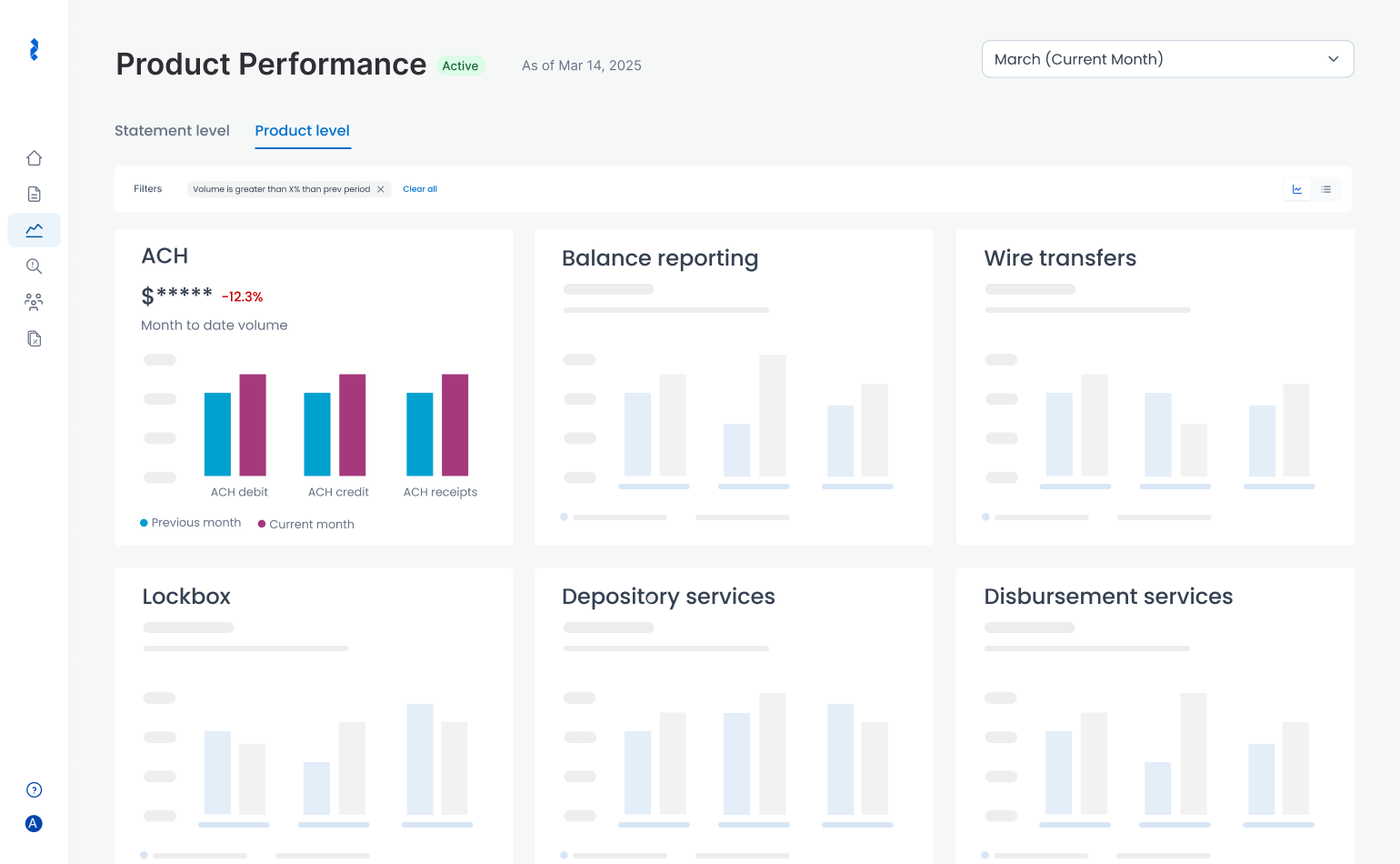
- Modern Account Analysis provides continuous visibility into how products are performing in-market.
- Live “mission control” dashboards surface:
- Margin and fee realization
- Volume trends
- ECR drift
- Underpriced services
- Misapplied fees and exceptions
- Product teams can see issues as they emerge, not months later, and take corrective action before problems scale.
Stage 3: Annual Pricing Review (APR) as a Continuous, Data-Driven Process
In many banks today, the Annual Pricing Review is not truly “annual.” It’s a prolonged, reactive effort driven by manual extracts from legacy billing systems. It can take 12–18 months to prepare, which is far too slow in a modern banking environment.
Today’s challenges:
- Usage and fee data live deep inside decades-old billing engines.
- Product teams rely on point-in-time snapshots instead of continuous performance data.
- Pricing decisions are made with incomplete visibility into customer behavior, profitability, and leakage.
What it should look like:
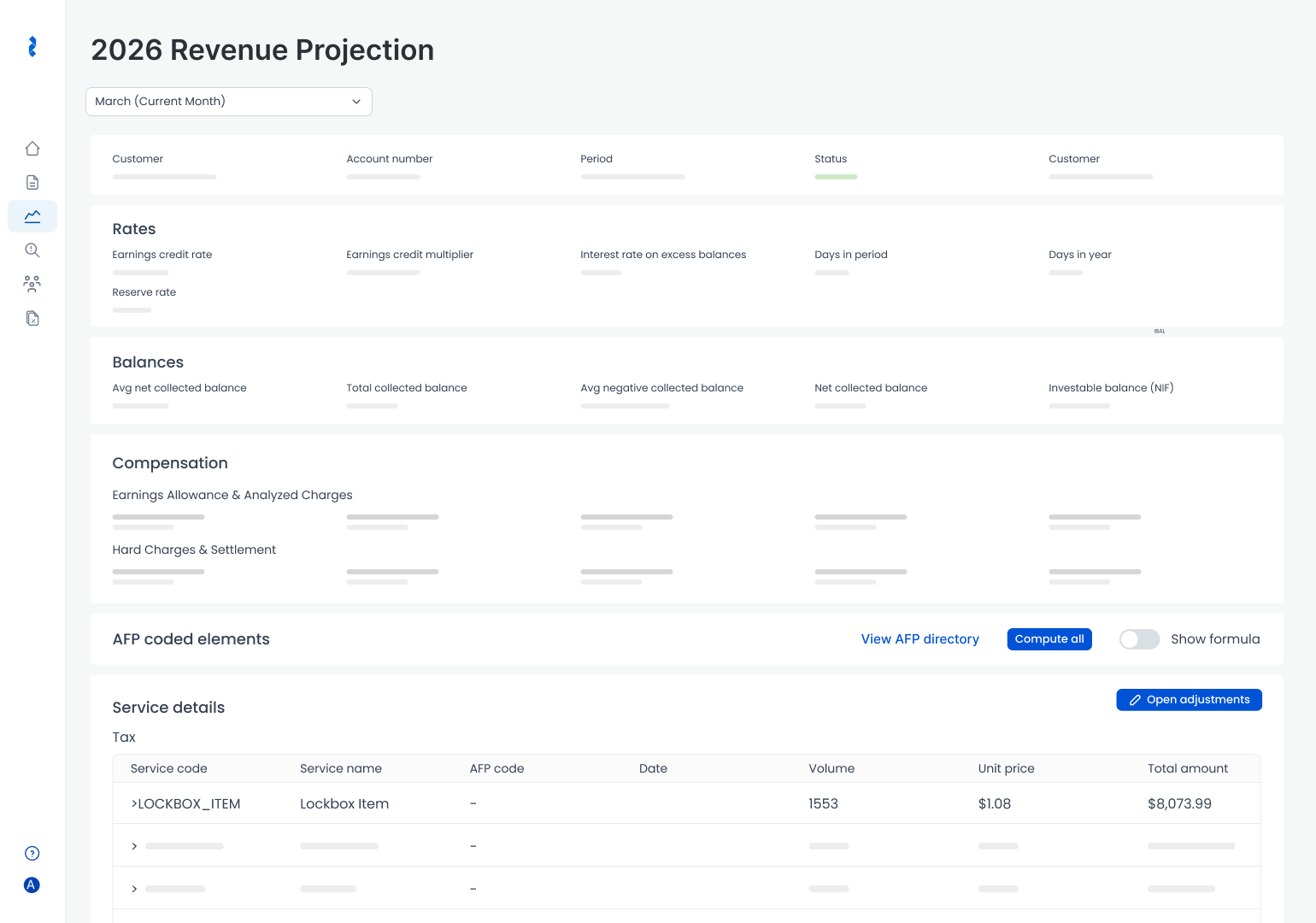
- Pricing and products are explicitly tied to review dates, with automated alerts signaling when changes are due.
- Temporary discounts automatically sunset; expired arrangements revert to standard pricing unless intentionally renewed.
- APR becomes a structured, repeatable, and efficient process, supported by accurate, up-to-date usage and profitability data.
- Product teams enter the Annual Pricing Review with confidence, armed with real performance insights rather than last-minute reconciliations.
In this model, APR is no longer a once-a-year scramble. It becomes a natural extension of ongoing product governance, allowing Product teams to continuously refine pricing strategy and protect revenue.
Reimagined Account Analysis With Zafin
Zafin’s modernized Account Analysis ecosystem gives Product teams the foundation and control they need to innovate faster, govern pricing effectively, and improve product profitability, without being constrained by the core.
- Centralize product and pricing definitions outside the core with a governed, versioned, and auditable Product Catalog that supports bundles, waivers, ECR, tiering, and attributes.
- Give Product teams direct control over pricing changes, eliminating dependency on IT tickets and long change cycles.
- Model pricing changes before rollout, simulating portfolio, product, and customer-level revenue impact with confidence.
- Shorten Annual Pricing Review cycles by using real-time usage, fee, and profitability data instead of manual extracts from legacy billing systems.
- Enforce pricing guardrails automatically, ensuring Sales executes approved pricing consistently across the organization.
- Eliminate revenue leakage by managing exceptions, expiries, temporary deals, and waivers centrally and transparently.
- Unify billing and Account Analysis insights into a single hub for ongoing performance monitoring and profitability analysis.
- Enable end-to-end workflow continuity, so pricing intent flows seamlessly from design to deal negotiation, billing execution, and performance tracking—without manual re-entry or blind spots.
Take control of product profitability, pricing agility, and revenue performance. See how reimagined Account Analysis gives Product teams the visibility and governance they need to move faster, without compromising control. Talk to one of our experts today.