
From Product Banking to Relationship Advantage
Banks were built around products. Customers expect relationships. Banks that close the gap win a greater share of the customer.
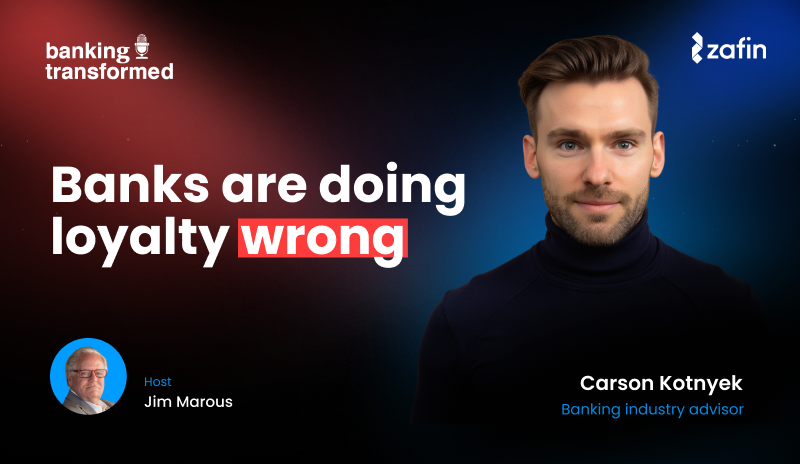
Hear Carson Kotnyek, Head of Industry Advisory at Zafin, explain why this shift is accelerating and how banks can respond.
Start closing the relationship gap
Turn fragmented interactions into personalized, relationship-driven experiences.
Banking has fundamentally changed. Product-centric models are breaking down as customers expect personalization, recognition of their full relationship, and offers that reflect their evolving needs.
Customers now assemble their financial lives across providers. Fintechs for payments, digital banks for savings, and traditional banks for lending. For banks, this results in fragmented relationships, reduced visibility, and lower share of wallet.
From constraints to competitive advantage
Many banks remain constrained by legacy models that organize around products, not relationships. The result is limited visibility across the customer lifecycle, rising acquisition costs, lower retention, and missed opportunities to grow share of wallet.
How winning banks compete
Leading banks are already making this shift. They use AI-driven offer management, behavior-based loyalty, and intelligent tiering to deliver personalized experiences at scale -reducing fragmentation, strengthening relationships and increasing share of wallet.
Zafin enables this shift by operationalizing relationship banking. With unified offer management, loyalty, tiering, and embedded compliance, banks move from product-level decisions to relationship-level execution, acting on customer insights in real time. The result is stronger retention, deeper relationships, and greater share of the customer.
More insights


Sign up for a relationship banking workshop
Learn how to increase share of wallet, improve retention, and compete more effectively through relationship banking.