





For operations leaders in corporate treasury, Account Analysis is a mission-critical process that directly impacts revenue, client experience, compliance, and reputation. But in many banks, your responsibility is made heavier by the systems themselves.
Rekeying between siloed systems is still common. Deal terms arrive in fragmented formats. Exception handling depends on manual tracking. Month-end reconciliation becomes a high pressure exercise in tracking down missing data before invoices go out the door.
The operational reality
In many institutions, Account Analysis operations remain manual, fragmented, and reactive. Critical data is spread across systems that often do not communicate with one another creating stress, especially at month-end. Reconciliation requires detective work. Billing errors surface after the invoices have gone out. And teams scramble to validate that what was sold, configured, and billed actually aligns.
Where the lifecycle breaks down
Looking at the lifecycle from an operations-centric perspective makes the friction clear from the moment a deal closes to the moment a client questions an invoice, legacy Account Analysis introduces unnecessary risk and manual effort at every stage.
Three critical stages where manual processes create risk, delay, and loss of control.
Deal closes
Today
Deal terms scattered across emails, PDFs, CRM notes, and spreadsheets. Operations teams manually interpret and re-key fees, bundles, waivers, and exceptions with no system-level validation. Execution depends on individual diligence, not systemic control.
Should be
Approved pricing intent flows directly into a centralized platform. Built-in validation catches errors before they occur.
Month-end billing
Today
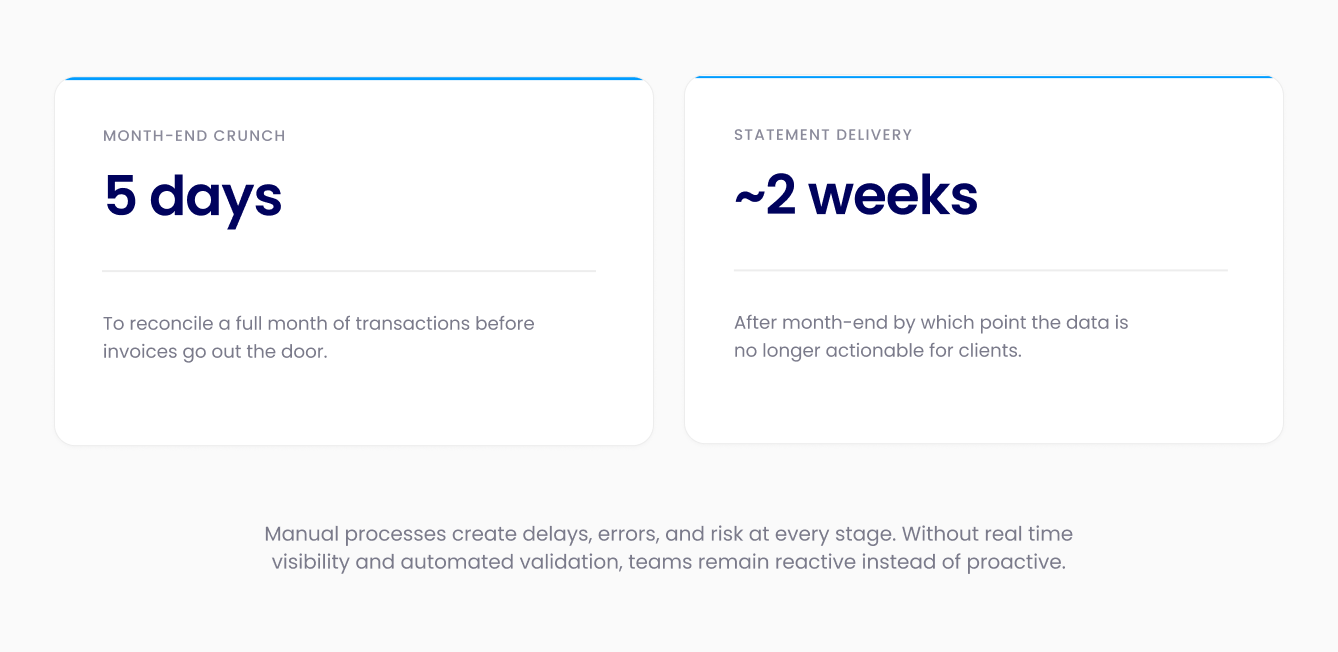
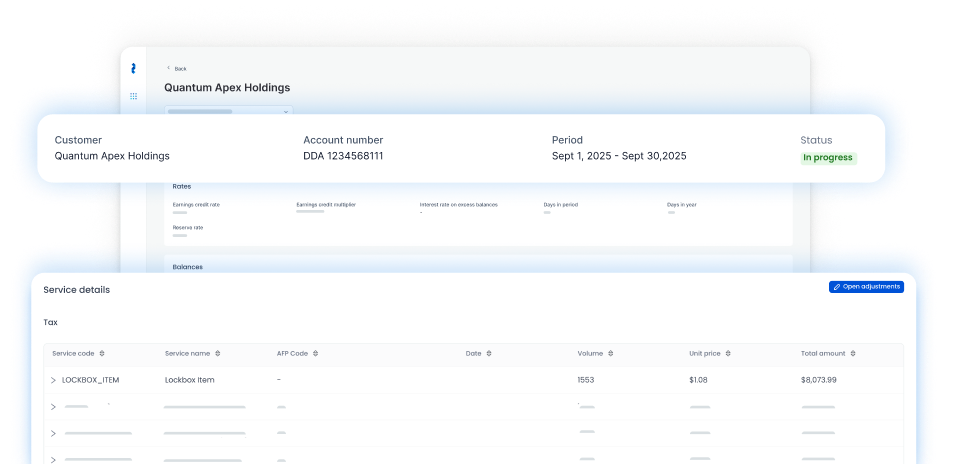
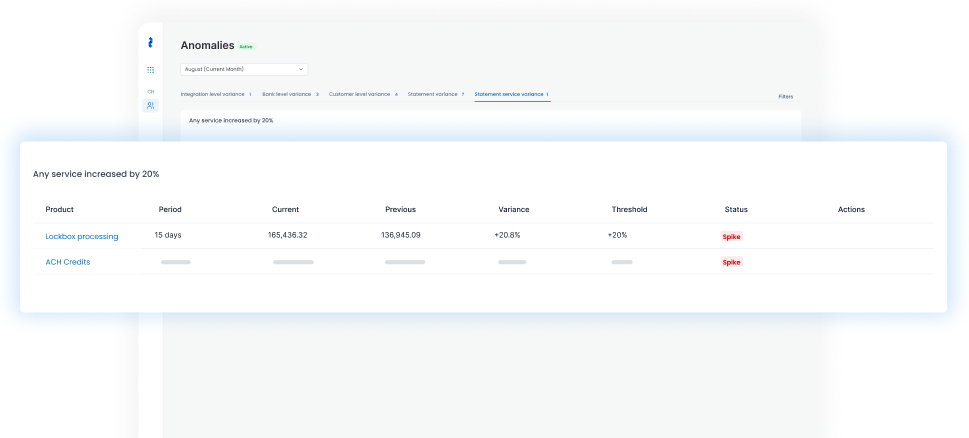
Operations must get through a month’s worth of reconciliation before a single invoice goes out. Billing errors surface late, teams scramble to investigate, and there’s little visibility into how fees were calculated or which rules were applied. Month-end becomes crisis management, not a controlled process.
Should be
Real-time visibility into billing logic as the month progresses. Anomalies flagged early. Month-end becomes predictable, not panicked.
Ongoing control
Today
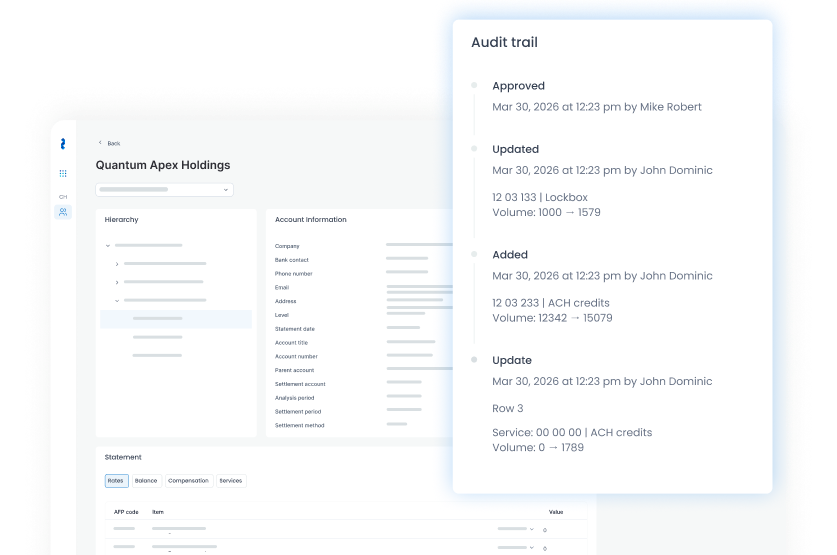
Clients question invoices, and Operations has no simple way to validate pricing intent versus execution or reconstruct how a specific fee was derived. Disputes lead to escalations, write-offs, and client frustration. Without end-to-end traceability, even simple inquiries become time-consuming investigations.
Should be
Full traceability from deal terms to billed outcome. A single source of truth. Disputes resolved quickly and confidently.
- Lower risk
- Higher efficiency
- Total revenue assurance
The statements arrive two weeks after the month ends — just in time to be useless. The only reason they’re built that way is tradition. In today’s world, there’s no reason.
– Dan Gill, Zafin Industry Advisor
Reimagined Account Analysis for Operations with Zafin
Zafin gives operations teams the control, visibility, and governance they’ve been missing so they can reclaim their time from chaotic month-ends. With a centralised execution layer for pricing and Account Analysis rules, Zafin removes the need for manual rekeying and cross-system reconciliation.
Automated exception management ensures waivers and temporal pricing are governed and auditable. Real-time monitoring provides early visibility into billing accuracy and potential leakage, reducing last-minute surprises. Most importantly, Zafin connects product intent, sales execution, and operations delivery within a single, governed framework. The handoffs become seamless. The controls become systemic, and billing becomes something you can trust.
Talk to our expert to see how modern Account Analysis can bring control and confidence back to your operations.